
How AI Is Transforming Your Relationship with Your Accountant
As a small business owner or individual client, you may have heard the buzz about artificial intelligence (AI) in many industries. Accounting is no exception – AI is already here, and it's changing how accountants work with you. Far from replacing your accountant, these technologies are set to enhance the services, communication, and value you receive. This thought-leadership overview will explain what short-term and long-term changes you should expect in the age of AI, and how to ensure your accountant is leveraging AI for your benefit.
The Immediate Changes: Faster Service and Greater Accuracy
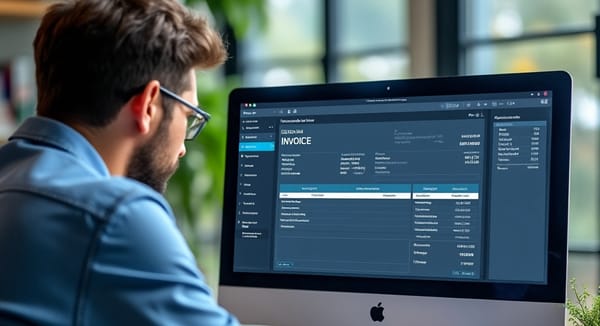
In the short term, AI is helping accountants deliver services more efficiently and accurately. Routine, time-consuming tasks are being automated: modern accounting tools can now perform data entry, receipt processing, transaction coding, and bank reconciliations with minimal human input. For example, Dext – a popular bookkeeping automation tool – uses AI to extract data from receipts and invoices, categorizing them and even matching them to bank transactions. Similarly, cloud accounting platforms like Xero have AI-driven features for scanning invoices and automating reconciliation tasks. By letting software handle repetitive processes, your accountant can close the books faster and with fewer errors.
Accuracy is improving as well. AI systems analyze data with a high level of precision, catching inconsistencies or anomalies that humans might miss. They perform repetitive calculations and checks without tiring, which means less risk of manual error or oversight. In fact, firms utilizing AI are already seeing significant time savings and improved accuracy, leading to greater client satisfaction. AI-assisted audit tools, for instance, can review entire datasets to flag discrepancies quickly, resulting in cleaner records and fewer late surprises in your financial reports. For you as a client, this means more confidence that your financial information is correct and up-to-date.
Quicker communication is another immediate benefit. Some firms use generative AI like ChatGPT to draft routine emails or answer common questions, helping them respond to clients faster. AI chatbots (often powered by ChatGPT or similar models) can even handle simple inquiries or provide updates around the clock, so you’re not always waiting for business hours to get basic info. This doesn't eliminate the human touch – instead, it frees your accountant to focus on more complex questions and personal conversations. The end result is swift responses on straightforward matters and more time spent discussing the things that truly require an expert’s insight.
Real-Time Reporting and Insights
One of the most exciting changes you’ll notice is the move toward real-time financial reporting. Traditional accounting often involved waiting until month-end or quarter-end to see how your business was doing. AI-powered systems, combined with cloud accounting software, enable continuous updating of your books. Transactions from your bank feed can be categorized by AI in near real time, and receipts you snap on your phone can be auto-processed within minutes.
With AI handling data crunching at high speed, you get access to up-to-date insights on your financial performance at any time. This real-time visibility means you and your accountant can spot trends or issues as they emerge, not weeks later. For example, an AI tool might highlight that your expenses this week are trending higher than usual, or that a particular product’s sales are dipping. Instead of discovering this well after the fact, your accountant can alert you and discuss adjustments proactively.
This immediacy also allows your accountant to give advice based on current data rather than outdated figures. You can make decisions with confidence knowing you’re looking at the latest information. Clients increasingly want these real-time data insights from their advisors, and AI makes it possible. If your accounting firm is leveraging AI properly, you should expect a more on-demand, data-driven service – think interactive dashboards and live reports instead of static spreadsheets sent once a month.
From Number-Cruncher to Proactive Advisor
In the long run, AI is elevating your accountant’s role from a historical number-cruncher to a forward-looking strategic advisor. By automating bookkeeping chores, AI gives accountants back valuable time – and they’re investing that time in understanding your business and goals. The best accountants have always combined technical know-how with genuine concern for clients’ success. Now, with AI taking care of the grunt work, your accountant can spend more time on high-value activities: analyzing insights, planning with you, and providing guidance tailored to your situation.
You should expect more meaningful conversations and proactive advice. AI tools excel at sifting through complex financial data to surface patterns (like cash flow pressures, cost trends, or anomalies). Your accountant, armed with these AI-driven findings, can translate the numbers into plain-English insights: the “what” is uncovered by AI, and your accountant delivers the “so what” (implications) and “now what” (actionable next steps). For example, if an AI analysis flags that your profit margins are thinning on a service line, your accountant might suggest pricing changes or cost optimizations to address it. If a forecast tool (such as those in Xero’s AI-enabled analytics) predicts a cash shortfall next quarter, your accountant can help you strategize now – whether it’s securing financing or adjusting expenses.
Advisory services are getting a boost. With AI handling data-heavy lifting, accountants can focus on advisory areas like tax planning, risk management, and business strategy that add real value to clients. They can run "what-if" scenarios more easily because AI can quickly crunch the numbers for various forecasts or budgets. The advice you receive is more informed and often more personalized, since your advisor isn’t spending all their time entering data. In short, your accountant is empowered to be a true partner in your business growth – a trend that will only deepen in the coming years.
Crucially, none of this means the human element disappears. On the contrary, an accountant’s human judgment and insight become even more important. AI can provide the data and even initial analysis, but interpreting those results in context and advising you on decisions is something AI cannot replace. Building a trusting relationship – understanding your unique goals and concerns – remains firmly in the realm of people. Think of AI as an assistant working behind the scenes: it delivers reliable information to substantiate your accountant’s recommendations, so that advice comes faster and with more backup. But empathy, professional skepticism, and business acumen are skills your accountant brings to the table. As one accounting tech leader put it, “Adopting AI doesn’t remove the human element – it amplifies it.” When your accountant leverages AI, they’re not handing your finances to a robot and walking away; they’re using it to serve you better.
AI Tools Your Accountant Might Use (and What They Do)
Modern accountants have an expanding toolbox of AI-powered software. Here are a few key AI tools and platforms you might hear about, and how they enhance the services you receive:
- ChatGPT and Generative AI: ChatGPT is an AI language model that can understand and generate human-like text. Accountants use generative AI to streamline communication and analysis – for example, drafting clear explanations of financial results, summarizing tax law changes, or even providing a chatbot on their website to answer basic client questions. ChatGPT can quickly analyze large volumes of data or text and pull out insights, which helps in preparing reports or doing research. It can also assist with tasks like writing a first draft of an email or financial narrative, saving your accountant time. The benefit to you is faster turnaround and well-explained, accessible information. (Of course, professionals will review AI-generated content for accuracy – the accountant’s oversight ensures the output is correct and tailored to you.)
- Dext (Receipt Bank): Dext is a popular AI-driven tool for bookkeeping automation. It allows you or your accountant to feed in receipts, invoices, and bills (via a mobile app, email, or even WhatsApp) and automatically extracts the key data. No more shoeboxes of receipts – the AI reads dates, amounts, suppliers, and categories from your documents with a high degree of accuracy, then publishes the data into accounting software like Xero or QuickBooks. Dext’s AI can categorize expenses, match documents to transactions, and flag duplicates or inconsistencies, dramatically reducing manual data entry. For clients, this means your books are updated faster and with fewer errors. You may notice your accountant spends less time chasing paperwork because much of it is handled digitally and intelligently.
- Xero (with AI Integration): Xero is an example of a cloud accounting platform that has embraced AI to improve its features. If you use Xero or a similar system, many AI benefits are built-in behind the scenes. Xero’s AI capabilities assist with receipt and invoice scanning, automatic coding of transactions, bank reconciliation, and even cash flow forecasting. For instance, Xero can read a photo of an invoice and create a transaction from it, or learn from your past bookkeeping decisions to suggest how new transactions should be categorized. The AI helps ensure your accounts are up-to-date without your accountant having to manually input every line item. Xero also offers analytic tools (like Xero Analytics Plus) that use AI/ML to project future trends from your data, giving both you and your accountant a heads-up on what’s around the corner. The integration of AI in platforms like Xero means your accountant can deliver real-time insights and forecasts more easily, and spend more time discussing strategy instead of sorting receipts.
These are just a few examples – other tools and apps (from audit software to financial planning tools) are adopting AI features as well. The common theme is that they automate the low-value work and augment the high-value work your accountant does. When evaluating an accountant or accounting firm, it’s worth asking about the technology they use. An AI-enabled practice is typically more efficient and responsive, because it uses the best tools to support client service rather than relying on outdated manual processes.
What to Expect from an AI-Savvy Accountant (Assessing Your Advisor)
Given these advancements, how can you tell if your accountant is leveraging AI to deliver superior service? Here are some signs and tips for assessing whether your advisor is keeping up with the times:
- Faster Turnaround & Responsiveness: If your accountant regularly delivers financial reports or answers to inquiries much faster than in the past, they may be using AI assistance. For instance, quick answers to ad-hoc questions might be enabled by tools like ChatGPT helping draft responses or analyze data on the fly. A modern, AI-empowered accountant can often provide swift responses on routine matters, which boosts client satisfaction. You should expect timely communications and not have to wait weeks for information that could be generated promptly with available tech.
- Real-Time Reports and Dashboards: Does your accountant provide you with access to live financial dashboards or monthly reports that come straight from cloud software? Are they updating your books frequently (even daily) rather than long after month-end? These are signs that they are using automation and AI in bookkeeping. As mentioned, AI allows real-time data processing, so an accountant who embraces it will ensure you have up-to-date numbers and insights for your business decisions. If you find that you’re always looking at stale data or have to prod for updates, it might be worth discussing how technology could improve the process.
- Proactive Advice and Insights: An accountant effectively using AI won’t just be a passive number-cruncher – they will actively come to you with observations and suggestions. For example, you might hear something like, “Our software noticed your inventory turnover slowed down this month, shall we investigate the cause?” or “I’ve run a forecast scenario using our AI analytics tool, and it suggests you could free up cash by adjusting X… let’s talk options.” This kind of proactive, advisory approach is enabled by AI tools that surface patterns quickly. If your accountant is leveraging these tools, you’ll feel like they’re anticipating your needs and spotting opportunities (or risks) early. You should expect more forward-looking guidance rather than only retrospective reporting.
- Fewer Errors and Clear Explanations: Everyone makes mistakes, but an AI-enhanced workflow drastically cuts down on common accounting errors (like missed entries or misclassifications). Moreover, accountants using AI often have more time to double-check and to explain your numbers in plain language. Do your financial statements and tax returns come back error-free and accompanied by clear commentary? That’s a good indicator that accuracy tools are in play and that your accountant is focused on interpretation and communication (the parts that add value) instead of spending all their time on manual tasks. AI contributes to consistent, accurate outputs and transparency – something you have every right to expect.
- Use of Modern Tools: Don’t hesitate to ask your accountant what technologies they use to serve you. A forward-thinking accountant will likely mention AI-driven tools or at least cloud-based systems with automation. They might say they use a tool like Dext for receipt processing, or mention that they utilize Xero’s latest features, or that they experiment with ChatGPT for research. You don’t need to know the ins and outs of each tool, but hearing these names (or others like them) is a clue that your accountant is keeping up. In a recent survey, 77% of corporate tax clients said they prefer their firms to use generative AI in their work – in other words, clients want their accountants to be tech-savvy. A good accountant should be able to explain how adopting these tools benefits you (faster service, more insight, etc.), not just tout the tech for tech’s sake.
In evaluating your accountant, consider whether they are delivering the kind of modern, informed service that AI makes possible. If not, it might be time to have a conversation about how they plan to stay current. The accounting profession is evolving quickly – firms that fail to leverage technology risk being left behind “out of the future entirely”. You deserve an advisor who is equipped to provide the insight, speed, and proactivity that contemporary tools allow.
Conclusion: Embracing the AI-Enhanced Accounting Future
The age of AI is reshaping how accounting services are delivered, but always with the goal of serving you better. In the short term, you can expect more efficient service, prompt communication, and accurate records as AI takes over mundane tasks. In the longer term, your relationship with your accountant will likely become more advisory and collaborative, with a focus on real-time insights and strategic guidance rather than just historical reporting. The technology might be complex, but the outcome is simple: a smoother experience for clients and more value from your accountant’s expertise.
As a client, the key is to stay informed and open to these changes. Don’t be afraid of AI in accounting – recognize its benefits and expect your accountant to leverage them on your behalf. The best accountants are not being replaced by AI; they are partnering with AI to enhance the services they provide. In practical terms, this means you get the best of both worlds: the accuracy and efficiency of intelligent software, plus the critical thinking and personal touch of a human advisor.
Going forward, you should demand modern, tech-enabled service delivery from your financial professionals. When your accountant embraces AI, you’ll notice the difference – faster answers, deeper insights, and a more proactive approach to helping you reach your financial goals. And that is exactly what you should expect in this new era of accounting. The tools may be high-tech, but the goal remains timeless: to support your success with expertise, integrity, and now a healthy assist from artificial intelligence.